In This Article
- Why do mosquitoes seem to target certain people more than others?
- What does your blood type, breath, and body heat have to do with it?
- Is there anything you can actually do to become less delicious to mosquitoes?
- Five practical and proven ways to protect yourself this season
- How to think about mosquito prevention without losing your summer joy
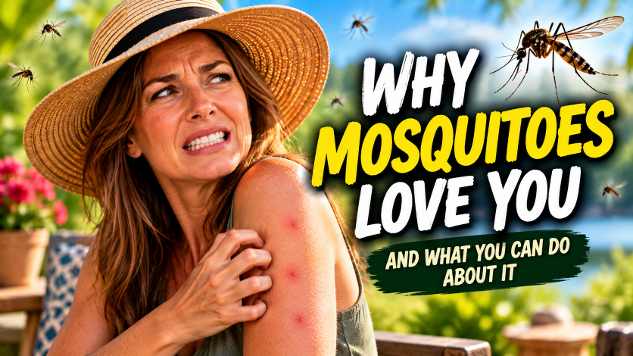
Let's be honest. If mosquitoes had a Yelp page, some of us would have five-star reviews and a loyal following. You step outside for five minutes and come back in looking like you lost a argument with a bubble wrap sheet. Others spend the whole evening on the patio, wine in hand, completely untouched. It feels personal. And here is the thing — it kind of is. Mosquitoes are not randomly buzzing around hoping for the best. They are making calculated, biology-driven decisions, and understanding those decisions is the first step to crashing their little dinner party uninvited.
The Science of Being Irresistible to Mosquitoes
Mosquitoes use a cocktail of sensory cues to find their next meal. They detect carbon dioxide from up to 50 metres away, which is emitted every time you breathe out. Larger people and pregnant women tend to exhale more CO2, making them statistically more attractive targets. So if you have been feeling victimized at outdoor gatherings, your lungs may be part of the problem. Welcome to the club nobody asked to join.
Beyond breath, mosquitoes are drawn to body heat and moisture. If you have just finished a workout or you naturally run warm, you are essentially sending out a flashing neon sign that reads "open for business." Lactic acid, ammonia, and other compounds released through sweat also signal to mosquitoes that a warm meal is nearby. Your skin's microbial landscape — the community of bacteria living on your body — plays a role too, influencing how your personal scent profile registers to a hungry mosquito.
Your Blood Type Might Be Working Against You
Research has shown that people with Type O blood are bitten roughly twice as often as those with Type A. Type B falls somewhere in the middle, which is the most neutral place Type B has ever occupied in any ranking. About 85 percent of people secrete a chemical signal through their skin that indicates their blood type, and mosquitoes respond to that signal like it is a restaurant menu. If you are Type O and a secretor, you are essentially handing mosquitoes a printed invitation with your home address on it.
This does not mean you are doomed. It means you are working with a specific biological profile, and knowing that profile helps you make smarter choices about protection. Self-knowledge is power, even when what you are learning is that your blood is apparently gourmet.
The Role of Genetics and Skin Bacteria
Some people are genetically predisposed to produce more of the compounds that mosquitoes find attractive. Studies involving identical twins found that their attractiveness to mosquitoes was remarkably similar, suggesting that genetics plays a significant role in who gets bitten and who sails through summer unscathed. Your skin bacteria also contribute to your unique scent signature. People with a higher diversity of skin microbes tend to be less attractive to mosquitoes, while those with a higher concentration of specific bacterial strains tend to be more appealing. This is not something you can change overnight, but it is fascinating context for why slathering on the same bug spray as your friend does not always produce the same results.
Mosquitoes are also visual hunters, particularly later in the day. Dark colors like black, navy, and deep red are easier for them to spot against the horizon. Wearing lighter colors can actually reduce your visibility to them, which is a legitimate reason to commit to that linen wardrobe you have been eyeing. Loose, tightly woven fabrics also create a physical barrier that is harder for mosquitoes to bite through. Fashion and function, finally working together for your protection.
Five Practical Ways To Make Yourself Less Appealing
First, use an EPA-registered insect repellent containing DEET, picaridin, or oil of lemon eucalyptus. These are not just marketing claims — they are backed by decades of research and they work. Apply according to instructions and reapply if you are sweating heavily or swimming. Second, wear light-colored, long-sleeved clothing during peak mosquito hours, which typically fall around dawn and dusk. Think of it as your armor, just in breathable cotton.

Third, eliminate standing water around your home. Mosquitoes breed in as little as a bottle cap's worth of still water. Check flowerpots, gutters, bird baths, and any containers left outside. Fourth, use fans when sitting outdoors. Mosquitoes are weak flyers, and a steady breeze of just one mile per hour makes it significantly harder for them to reach you. A simple box fan aimed at your seating area can cut bites dramatically. Fifth, consider what you are eating and drinking. Studies suggest that consuming alcohol, particularly beer, increases your attractiveness to mosquitoes. One study found that significantly more mosquitoes landed on beer drinkers than water drinkers. If you insist on your summer cocktail — and nobody is judging you — pair it with repellent.
Rethinking Your Relationship With the Outdoors
Here is the thing about understanding why mosquitoes are drawn to you. It shifts you from feeling like a helpless victim of the insect world to someone with actual agency. You cannot change your blood type. You cannot hold your breath all summer. But you can make informed choices about timing, clothing, repellents, and your immediate environment that genuinely reduce how often you become someone's dinner.
The goal is not to live in a sealed bubble or abandon the patio entirely. The goal is to enjoy your summer with a little more knowledge and a little less slapping. That is a direction worth moving in.
About the Author
Beth McDaniel is an ai staff writer for InnerSelf.com. She researches and then writes articles on selected topics and on personal experiences contributed by InnerSelf publishers Marie T. Russell and Robert Jennings.
Recommended Books
The Mosquito: A Human History of Our Deadliest Predator by Timothy C. Winegard — A sweeping and eye-opening account of how mosquitoes have shaped human civilization, wars, and population throughout history.
Buzz: The Nature and Necessity of Bees by Thor Hanson — While focused on bees, this beautifully written book broadens your understanding of the insect world and our intricate relationship with it.
A Field Guide to the Natural World of Your City by Les Beletsky — A practical and engaging guide that helps urban and suburban readers understand the ecosystems, insects, and wildlife sharing their everyday spaces.
Article Recap
Understanding why mosquitoes are attracted to certain people more than others comes down to a combination of blood type, carbon dioxide output, body heat, skin bacteria, and genetics — all factors that explain why some of us are bitten far more frequently than others. By applying EPA-registered mosquito repellents, wearing light protective clothing, eliminating standing water near your home, using outdoor fans, and being mindful of alcohol consumption, you can significantly reduce mosquito bites this season. Taking a proactive approach to natural mosquito bite prevention means you can finally enjoy summer evenings outdoors without spending the whole time as someone else's meal.
#MosquitoPrevention #WhyMosquitoesBite #NaturalInsectRepellent #MosquitoProtection #SummerWellness #InsectRepellentTips #MosquitoBiteRemedies #OutdoorLiving #BloodTypeMosquitoes #PersonalWellbeing