

In This Article
- Why your body clock affects far more than bedtime
- How light, meals, movement, and screens can shift your circadian rhythm
- What happens when sleep debt and social schedules pull you out of sync
- Why waking in the night or feeling wired at bedtime does not always mean insomnia
- Simple ways to support deeper sleep and a steadier daily rhythm
Getting enough sleep remains important. But an eight-hour stretch from 10 p.m. to 6 a.m. doesn’t necessarily feel the same as one from 1 a.m. to 9 a.m., especially when you switch between them.
If you keep the earlier schedule during the week and move to the later one on weekends, you’re repeatedly changing when you sleep and wake. The difference between your biological timing and the schedule you follow is sometimes called social jet lag. You may have had a full night’s sleep and still find Monday morning difficult.
Another process, known as sleep pressure, builds while you’re awake. The longer you go without sleep, the stronger that pressure generally becomes. Your circadian rhythm affects alertness at the same time, so the urge to sleep doesn’t increase evenly throughout the day.
This helps explain why you can feel tired in the afternoon and more awake later in the evening. That pattern alone doesn’t tell you what’s causing a sleep problem. It does show why being exhausted isn’t always enough to make sleep come when you want it.
The Light Around You
Light is one of the main influences on circadian timing. For someone following a typical daytime schedule, morning light can help shift the sleep and waking cycle earlier. Bright light in the evening can have the opposite effect, making sleepiness arrive later.
The light in your room matters as well as the screen you’re looking at. You might put your phone away and still spend the next hour under bright kitchen lights. How bright the light is, how long you’re exposed to it, and when you encounter it all affect its influence on your sleep timing. Blue-enriched light can have a stronger effect, so look at the room’s lighting along with your screen habits when deciding what to change in the evening.
Outdoor daylight is usually much brighter than indoor light. Going out for a short walk after waking gives you exposure that you may not get while moving between a bedroom, kitchen, and office.
If you’re groggy through much of the morning, getting daylight early is one habit to consider. In the evening, try lowering the lights before you intend to go to bed. Keeping the house brightly lit until the moment you switch everything off gives you little transition between the two.

Tired During the Day, Awake at Bedtime
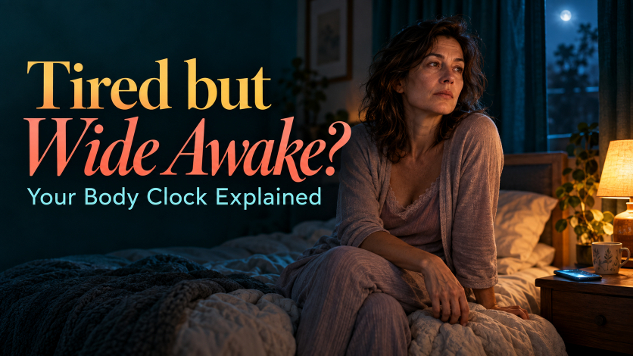
You’ve spent the day looking forward to sleep, then get into bed and feel wide awake. Several things may be involved. Stress can keep you alert. Caffeine may still be having an effect. Alcohol, a heavy meal, or vigorous exercise close to bedtime may also affect how easily you settle or how well you sleep afterward.
An evening increase in alertness can contribute, too. You may notice that you felt sleepy earlier but carried on with what you were doing. By the time you finally go to bed, that feeling has passed.
After several bad nights, worrying about sleep can become another difficulty. You start calculating how many hours remain before the alarm. You think about tomorrow’s work and how tired you’ll be. Then you check the time again.
You’re in bed, watching the time and working out how much sleep you could still get before morning. Each time you check, there’s less time left, and you feel more tense. Getting ready for bed may help you settle, but once you’re lying there, try to leave the clock alone.
Caffeine, Alcohol, and Meals
The afternoon coffee may still be keeping you awake at bedtime, even though you no longer feel the boost you got from it. Caffeine blocks adenosine, a chemical that contributes to the urge to sleep. Depending on the person, that effect can last six to eight hours or longer.
If you suspect caffeine is contributing to your sleep difficulties, look at when you last have it as well as how much you drink. Someone who is sensitive to it may need to stop earlier than someone else. Your usual afternoon cup is worth considering even if you’ve been drinking it for years.
A drink before bed might help you doze off, then leave you waking during the night. Alcohol can disrupt sleep and change how much time you spend in its different stages. You may fall asleep sooner and still have a disturbed night.
After a large, late dinner, you may still feel too full to get comfortable in bed. When you eat also affects some of your body’s daily rhythms, so it may help to have meals at roughly similar times. Dinner doesn’t need to happen at an exact hour, and a changing meal schedule may be only one of several things affecting your sleep.
Early Risers and Night Owls
By late evening, you may be ready for bed while someone else is still wide awake. In the morning, they struggle to get up at an hour that feels comfortable to you. These preferences have a biological basis, usually described as your chronotype.
Your preferred hours can change as you get older. Teenagers often want to sleep and wake later. Many older adults find themselves getting sleepy earlier in the evening and waking earlier, too. You may notice that the hours you once kept no longer suit you.
An early work start or family responsibilities can leave you getting up before you’ve had enough sleep. If you rarely feel sleepy until late, going to bed earlier may mean lying awake for longer. You can keep trying to follow the required schedule and still find yourself short of sleep.
Where your responsibilities allow it, consider adjustments you can maintain. A gradual change may be easier to keep than suddenly moving bedtime by several hours. You could begin with half an hour and pay attention to what happens over the following days, rather than judging the result after one night.
Making Your Routine Easier to Keep
A fairly consistent waking time gives you a useful place to start. Choose one that fits your obligations and allows enough opportunity for sleep. Try to avoid large changes between workdays and days off, particularly if you notice that sleeping in makes the next night more difficult.
Try spending ten or fifteen minutes outside after you get up. Morning daylight can help you keep a regular sleep schedule, although the amount of light and when you get it affect the result. If going out isn’t practical, sit near a bright window. You’ll get some daylight there, usually less than you would outdoors.
You meant to stop watching half an hour ago, but the phone is still in your hand. Try leaving it, or your tablet, outside the bedroom when you go to bed. Turn the lights down earlier in the evening, too.
You might enjoy a warm shower, a little stretching, or a few pages of a paper book before bed. Quiet music or a familiar podcast may help, too, provided you aren’t staying awake to hear the rest. Use whatever you find relaxing and can comfortably fit into your evening.
When Sleep Still Won’t Come
If you’ve been awake for a while and are getting annoyed, get out of bed for a bit. Leave the lights low and do something quiet. When you feel sleepy, go back to bed instead of staying there watching the time and worrying about how much sleep you’re missing.
If you snore or wake up gasping, bring it up with your doctor. The same goes for restless legs, difficulty sleeping, or feeling very sleepy during the day. Describe what happens and how often. Changes to your routine may help, but you could also have a sleep disorder that needs treatment.
You could try having your last coffee earlier or getting up at roughly the same time each day. A short spell outdoors after waking is another option. Pick something that fits your circumstances, keep a note of how you sleep, and use those notes to decide what to try next.
About the Author
Beth McDaniel is an ai staff writer for InnerSelf.com. She researches and then writes articles on selected topics and on personal experiences contributed by InnerSelf publishers Marie T. Russell and Robert Jennings.
Recommended Books
Why We Sleep by Matthew Walker — A clear, research based look at how sleep affects memory, mood, health, and performance.
The Circadian Code by Satchin Panda — This book explains how daily timing of light, food, and activity shapes metabolism, energy, and sleep.
Hello Sleep by Jade Wu — A practical guide that blends sleep science with compassionate strategies for improving insomnia and nightly routines.
Article Recap
Understanding what you need to know about sleep and circadian rhythms can change the way you think about exhaustion, bedtime struggle, and those nights when you feel tired but wired. When you support your internal clock with morning light, consistent wake times, and better evening habits, you give your body stronger cues for how to sleep better naturally and wake feeling more restored.
#SleepHealth #CircadianRhythm #BetterSleep #SleepTips #MorningLight #InsomniaHelp #HealthyHabits #MentalWellbeing #StressAndSleep #PersonalGrowth