




In This Article
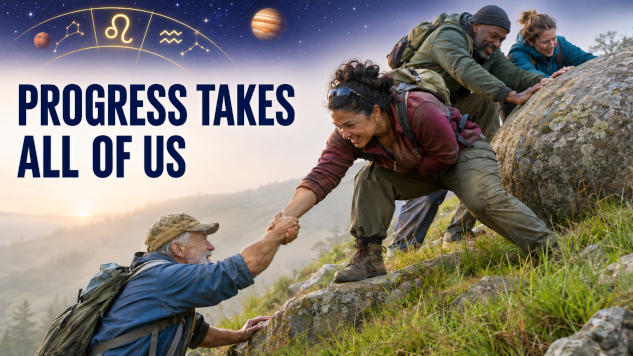
- Why life without problems might leave us feeling a little lost.
- When does the pressure of a deadline become an exhilarating rush?
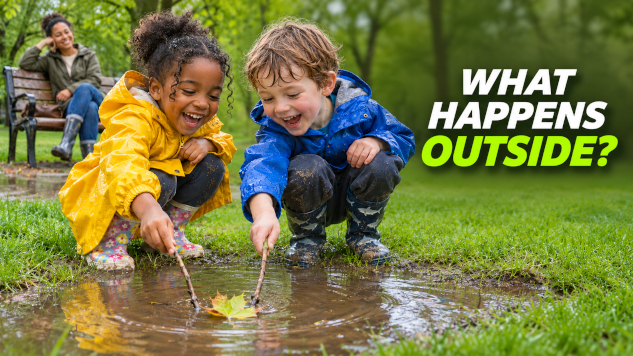
- What are we getting from our recurring problems?
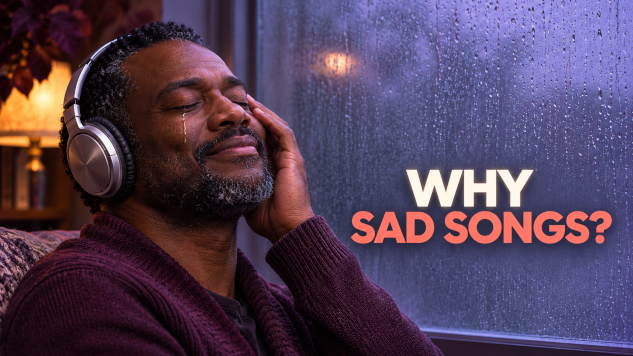
- Could helping others distract us from our own unattended needs?
- Can we feel engaged and alive without waiting for another crisis?
Imagine this: You wake up tomorrow and all your problems are gone. No more aggravating calls, urgent messages, and obnoxious people. No more worries about finances, relationships, or health. Everything is perfect.
So what do you feel? At first, certainly elated. But after that, maybe a bit lost. After all, what will you do? Nothing to complain about, nothing to tell "horror" stories about. Life might actually seem boring, because after all, our problems create action, mystery, and drama.
Most of us say we hate problems. We want life to go smoothly and with no glitches. But is that true?
Of course, if you are dealing with illness, loss, or the struggle to pay for food and housing, you may have no doubt that you would welcome some relief. I'm not suggesting that we secretly enjoy all of our suffering. But what about the everyday problems that we allow to become bigger than they need to be? Or the crises that have become such a familiar part of our life that we don't quite know what to do without them?
Part of Me Enjoyed the Crisis
I recall when InnerSelf was a print magazine... I had a printing slot reserved at the printer and I had to have the new issue there by that date and time; otherwise, it might not get printed on time. And there was the stress of needing more advertisers to be able to pay the staff and the printing bill, and all the other bills. All of these problems added up to a stressful situation.
And of course, the stress would often overflow and burn the people around me. A pressure cooker uses steam to operate, but it can also burn the user if the steam gets to be more than the cooker can handle. However, what I realized at one point is that part of me enjoyed the crisis mode of the deadline and of not being sure we'd make it. It was exhilarating like a movie where you didn't know if the good guy would win. It was a rush! But just like a sugar rush, it might feel great while it's happening, but the aftermath can leave you feeling like you need to be scraped off the floor.
Yet while we are experiencing the high, it feels good. And somehow, the problems can be the same. While we are struggling with the problem, we might feel a rush of energy at striving to succeed, at aiming to conquer the problem once and for all.
Scary Can Be Fun!
Many of us also enjoy scary movies, life-threatening challenges, and situations that get our adrenaline rushing. When we are stimulated by a new experience, or challenged by a new situation, we feel excited. We look forward to what comes next. We feel alive. Parachute jumping, anyone?
I remember the first time I went water skiing in high school. My boyfriend's uncle owned a boat and water skis. I was a lousy swimmer, but the thought of the rush of water skiing put all of that out of my mind. I put on the skis and the life jacket, and the boat took off with me flying behind it, or so it seemed. Yes, of course I fell. But the rush of the event eclipsed any fear or stress in that event.
Consequently, if all our stressful situations disappeared, would we quickly find some other adrenaline-producing action to take their place? I believe we would. Because what we really enjoy isn't problems or stress. It's the thrill of the experience, the rush, the anticipation of getting through it, or of solving the problem.
Problems: Yea or Nay?
Now don't get me wrong. I am definitely not advocating for problems. There are way too many of those going around. And not only that, they don't seem to be evenly distributed. Just like money, some have more than others. Yet it seems that, usually, the less money you have, the more problems and worries you have. Not that money buys happiness, but it definitely will replace the junker-car you're driving, or pay off the credit card debt that is siphoning money out of your pocket at an annual interest rate of 29%.

So yes, money can help alleviate our problems, yet the wanting of the money can be a problem in itself. Especially if the desire for money is a type of competition in order to show that you have more than someone else. Some people even work more than one job so they can buy luxuries that they don't need. This creates stress in that the increased pressure and tiredness does not equate to more happiness, just to more stuff.
And of course stress is not just about money, but it does seem to be tightly interwoven with it. The more money we think we need, the more pressure we are willing to put on ourselves to attain it.
What Am I Getting From This Problem?
So perhaps it's not always about the problem. It's about the energy attached to it. The failure to win can bring dejection and self-judgment, while the challenge of finally getting it right can help us feel energized, focused, necessary, involved, and very much alive.
What we need to ask ourselves is: What am I getting from these recurring problems?
And the answer may be different for all of us. For some, it may be that we get attention from others. For others it can be the challenge of overcoming them. Maybe if the problem involves someone else, it makes us feel needed or important. Perhaps it gives us a goal, something to strive for. Or it may even be just as simple as giving us something to talk about.
At other times, it may be that we need a scapegoat for how our life is turning out, and the problem provides just that. And possibly, our petty daily problems keep us from examining a bigger issue, like a marriage that is not working, or a job that we hate.
Are we consciously creating these problems as entertainment or to deflect us from a larger issue? Probably not. Yet we may allow these small problems to take on more importance than they deserve because they serve as a distraction from the greater problem that we don't want to face or don't know how to handle.
Once we recognize what we are getting from a problem, we can ask another question: Could I meet that need in a way that creates less stress?
If we need a challenge, perhaps there is something we've wanted to learn or create. If we need connection, perhaps we can reach out to someone without waiting until something is wrong. If we want to feel needed, there are ways to contribute that don't require us to be in crisis mode.
We can still have a goal, something to strive for, something to look forward to. Something that helps us feel alive.
Are These Even Our Own Problems?
Maybe we've become the person that all our friends and family come to when they have a problem, because they know we will fix it, or at least share our time with them while they talk about their problems. So the problems we are faced with might not even be our own. They are our friends', neighbors', family members'.
And even more so, we can also get involved in the problems of famous people, or even characters in an ongoing saga online. People we don't even know become part of our problem-solving experience. We "get involved" with fictional or online personas and consequently, their problems occupy our mind and our time as well.
And don't get me wrong. There is nothing bad about trying to help others. I do it all the time. I'm doing it now by writing this article. This is part of our human nature. It is part of the Love that we are. We don't like to see someone suffer if we can help them. We reach out to others in need to give them a hand.
And this is good as long as it is not a way to escape our own life and our own problems. We can assist, we can share, we can love. But not at the expense of our own health, our own life.
We have to take care of our well-being. Not at the expense of others, but in conjunction with sharing love and caring with others. It's not an either-or situation. It's not you or them. It's you and them.
And sometimes taking care of our own life means noticing how much time we spend talking about someone else's problems while leaving our own unattended.
One Step at a Time
Problems exist and they come and they go. Life is a series of waves, of ups and downs that become learning experiences. As children we had to fall many times before we learned to walk. Even learning to read and write was a challenge until we finally got it. And so it goes with many other things we learned.
But the part we can work on is how we respond to the problem. Do we cuss, cry, pull on our hair, attack and blame others? Notice the next time you face a problem. What do you say about it? Do you say, "This is impossible. I'll never get out of this mess"? Or do you say, "I will look for a way through this situation. What can I do first?"
We may feel upset or overwhelmed at first. Yet we don't have to stay there. We can take a breath and look for a next step.
Of course, we can put our energy into "pissing and moaning" about the problem, about the other person who is responsible for it, etc. Or we can look for the tools that will help us, and we can ask for help and guidance either from other people or from our own inner knowing.
That doesn't mean we caused the problem, or that it is ours alone to fix. Someone else may need to take responsibility for their actions. Some problems require us to work together. And sometimes what we need is some help in carrying something that has become too much for us.
We can't fix everything. Sometimes the next step is setting a boundary, allowing ourselves to grieve, or accepting that something has changed and we have to find a different way forward.
But we can ask ourselves what we can do right now to make this even just a tiny bit better. One step at a time. One decision at a time.
Learning to Ride the Waves
So we probably won't wake up tomorrow and never have any more challenges. Well, unless we're no longer living, and even then, we don't really know what's waiting for us after this life. But for now, this life is what we have. With its problems, its traumas, its fears, its challenges.
What we can do is face those with a willingness to find our way, even when we don't yet know how. We can trust in life, in ourselves, and in the help that may be available to us. We don't have to handle everything alone.
So yes, perhaps our problems do make us feel alive. Maybe they give us a challenge, a goal, a reason to get up and get involved. But can we also feel alive when there isn't a crisis? Can we enjoy creating something, learning something, sharing time with someone, without needing a problem to bring us there?
And when things are going smoothly, can we let ourselves enjoy that too? Maybe the gift is learning to ride the waves and enjoying the thrill of the wave as well as the calm afterwards. We can find challenges that help us grow, and we can give ourselves permission to rest between them.
Life will bring us waves of its own. We don't have to keep stirring up the water. Trust it, and do your best.
About The Author
 Marie T. Russell is the founder of InnerSelf Magazine (founded 1985). She also produced and hosted a weekly South Florida radio broadcast, Inner Power, from 1992-1995 which focused on themes such as self-esteem, personal empowerment, and well-being. Her articles focus on transformation and reconnecting with our own inner source of joy and creativity.
Creative Commons 3.0: This article is licensed under a Creative Commons Attribution-Share Alike 4.0 License. Attribute the author: Marie T. Russell, InnerSelf.com. Link back to the article: This article originally appeared on InnerSelf.com
Related Books:
* Addicted to Drama: Healing Dependency on Crisis and Chaos in Yourself and Others
by Dr. Scott Lyons
Why can calm feel uncomfortable while another crisis feels strangely familiar? Scott Lyons examines how emotional intensity can become a way of coping and feeling alive. He offers ways to recognize recurring patterns of chaos and find connection and engagement without continually returning to stress.
* Meditations for Mortals: Four Weeks to Embrace Your Limitations and Make Time for What Counts
by Oliver Burkeman
What if we stopped treating life as a problem that must be completely solved? Through short reflections, Oliver Burkeman encourages accepting our limitations and making room for what matters now. A thoughtful companion to enjoying life even when everything isn't fixed—and allowing ourselves to appreciate peaceful moments when they arrive.
* Drama Free: A Guide to Managing Unhealthy Family Relationships
by Nedra Glover Tawwab
Other people’s problems can easily become the center of our own lives. Tawwab offers practical guidance for recognizing unhealthy family patterns, setting boundaries, and caring about others while remaining attentive to our own needs. Her approach complements the article’s question, “Are these even our own problems?”
You Shop. Amazon Pays Us.
InnerSelf Stays Free!
Please make your Amazon purchases using this special link —
it doesn't cost you a penny more.
Use this link. Thank you.
https://www.amazon.com/?tag=innerselfcom
Article Recap
Sometimes problems make us feel alive because they provide stimulation, attention, or a sense of being needed. Recognizing what we get from recurring problems gives us a chance to meet those needs with less stress. Finding peace without drama doesn't mean avoiding every challenge. It means choosing how we respond, asking for help when needed, and allowing ourselves to enjoy life when things are going smoothly.
#InnerSelf #MarieTRussell #SelfAwareness #InnerPeace #PersonalGrowth #EverydayStress #innerselfcom